For most growing businesses that need extra room for stock, tools, or equipment, commercial storage is the better choice than renting extra business premises. It costs less, carries far less commitment, and can be scaled up or down month to month. Renting premises only makes sense when you need staff on-site every day, customer-facing space, or room to run operations rather than hold goods.
The debate around commercial storage vs renting premises usually starts the same way. Stock is spilling into the office, or the garage is full. The instinct is to look for a second unit or a bigger lease. Before signing anything, though, it pays to compare what each option really costs and what it actually gives you.
Is Commercial Storage Better?
In most cases, yes. If the space is mainly for storage rather than people, storage gives you room without the overheads of a full property. Here is how the two options compare on the points that matter most.
What does renting extra premises really involve?
A second office, workshop or small warehouse can look like a natural next step. In practice, a commercial lease in the UK often brings more than the headline rent:
- Multi-year terms with break clauses and penalties for leaving early.
- A rent deposit, often several months up front.
- Business rates, service charges and utility bills on top of rent.
- Fit-out, maintenance and repair responsibilities.
- Legal fees and surveys before you even move in.
How does commercial storage work?
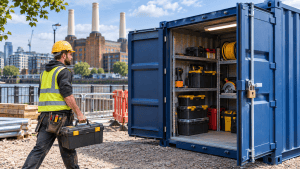
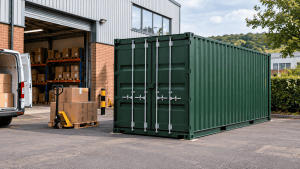
Modern business storage is built around flexibility. Steel shipping containers in gated yards are rented on a monthly rolling basis, so you pay for the space you need now and give notice when you no longer need it. Many container yards let you drive right up to the door.
A standard 20ft container offers about 160 sq ft of floor space, roughly the size of one and a half garages. That is enough for a dedicated stock room and packing area for a small online seller, or for the tools and materials of a busy trades team. Larger 40ft containers suit bulkier commercial loads, while smaller 8ft and 10ft units work well for archives or a few pieces of kit. Sizes vary by site.
Side-by-side Comparison
| Factor | Commercial storage | Renting extra premises |
| Contract length | Monthly rolling | Often multi-year lease |
| Upfront costs | Often no deposit or setup fee | Rent deposit, legal fees, fit-out |
| Running costs | One monthly fee, often with basic power and lighting | Rent plus rates, service charges and utilities |
| Scaling | Add or drop units as needs change | Locked into one floor area |
| Access | Often 24/7 gate access | Depends on building hours and landlord rules |
| Move-in time | Often same day, subject to availability | Weeks or months |
| Best for | Stock, tools, equipment, archives, furniture | Staff, customers, production and daily operations |
Cost and cash flow
The biggest advantage of storage is predictable spending. A single monthly fee replaces a stack of variable bills, which makes cash flow easier to plan. Because there is no long tie-in, you are not paying for empty space during a slow season. For start-ups and seasonal sellers, that difference alone can free up money for marketing, hiring or new stock.
Flexibility and scalability
Business needs rarely stay still. A retailer may need double the space in the run-up to Christmas and half of it by February. With flexible storage, you can add a second container for peak months and hand it back afterward. A lease, by contrast, fixes your footprint for years, whether you outgrow it or shrink.
Access and security
Security is often the deciding factor for tradespeople. Leaving tools outside overnight invites break-ins, while a well-run yard offers:
- Fenced, gated entry that opens only for registered customers.
- Recorded CCTV running round the clock.
- Lighting after dark for early starts and late finishes.
- Ventilated, ply-lined containers that limit condensation.
- 24/7 access so that you can collect materials before a 6am start.
That level of secure storage is hard to match in a small rented unit without paying extra for alarms and monitoring.
Who Benefits Most From Commercial Storage?
- Commercial teams: logistics, removals, fit-out crews, events and exhibitions, hotels and caterers needing overflow space
- E-commerce sellers: Amazon, eBay and Shopify businesses whose stock has outgrown the home
- Trades: builders, electricians, carpenters and contractors
- Offices on the move: furniture and files during a relocation or refurbishment
Bottom line
When the goal is to store goods rather than house people, commercial storage usually wins. It keeps costs predictable, avoids long leases and deposits, and lets you grow or shrink without penalty. Rent extra premises only when daily staff, customer visits or on-site operations make a full property essential. A sensible approach is to start with storage, track how much space you actually use, and step up to a flexible warehouse unit only when the numbers justify it.
Need secure, drive-up space across London and Hertfordshire? Explore WOW Storage business container storage, container sizes and Acton warehouse units, with monthly rolling terms. Contact us now for more information.
Frequently Asked Questions
Is commercial storage cheaper than renting an office or warehouse?
Usually, yes. Storage replaces rent, rates, deposits and utility bills with one monthly fee, and you can leave without breaking a lease.
Can I run my business from a storage unit?
You can store stock, pack orders, and keep equipment there, but a storage unit is not a workplace for staff or a customer-facing address.
How much space does a 20ft container give me?
A 20ft container offers about 160 sq ft, roughly one and a half garages, which suits most small business stock rooms. Sizes vary by site.
What is the minimum contract for commercial storage?
Many providers rent on monthly rolling terms, so you pay month to month and give notice when you no longer need the space.
When should a business choose a warehouse unit over a container?
A warehouse unit suits businesses that need more floor area, power to every unit and direct loading but still want to avoid a long lease.