
A storage unit is one of the few places in your business that nobody notices until it stops working. You only realise there’s a problem when you’re searching for stock before a delivery. Or maybe unloading a van after a long day, or trying to find a tool that should be easy to grab.
Storage unit organisation for businesses isn’t about creating a perfectly tidy space. It’s about removing those small delays that quietly slow down your business. A practical layout can save time, protect inventory, and make every visit quicker, even as your storage needs change.
Why Poor Organisation Costs More Than You Think
An unorganised unit wastes time in small amounts that don’t feel significant until you add them up. Five minutes searching for a specific box here, ten minutes moving things to reach something at the back there. Over a month, that’s hours you didn’t need to lose.
There’s also a real cost to losing track of inventory. Stock that gets buried behind other boxes might as well not exist until someone happens to find it again. For a retailer or e-commerce business, that’s money sitting unused on a shelf you forgot about.
Plan the Layout Before You Move Anything In
The biggest mistake we see is businesses moving everything in first and figuring out organisation later. By then, it’s already a mess. Spend ten minutes planning before the first box goes in and you’ll save yourself hours down the line.
Think in zones rather than one big undivided space. Keep frequently used items near the front and door, and put things you rarely touch toward the back. Group similar items together instead of scattering them based on whatever order they happened to arrive.
For Tradespeople
Keep tools and materials you use weekly near the entrance, with bulkier or seasonal equipment stored further back. A simple front-to-back layout based on how often you grab something beats a complicated system every time.
For Retailers and E-Commerce Sellers
Group stock by category or by how it moves. Fast-selling items belong near the front where you can grab them quickly during a busy fulfillment day. Slower-moving or seasonal stock can sit further back until it’s needed.
For Event Companies
Separate gear by event type or by how often it’s used. Staging and lighting that goes out every week shouldn’t be buried behind decor that only comes out twice a year.
Labelling and Simple Inventory Tracking
A label on every box sounds obvious, but it’s the single most skipped step. Even a basic system, contents written on the side in marker, beats no system at all. Colour-coded labels work well if you’re organising by category, department, or urgency.
For inventory tracking, resist the urge to build something complicated. A simple spreadsheet or even a written list taped to the inside of the door does the job.
The businesses that actually keep their unit organised long term are almost always using the simplest system, not the most detailed one. Complicated tracking systems tend to get abandoned within a few weeks because nobody has time to keep updating them.
Shelving, Pallets, and Bins
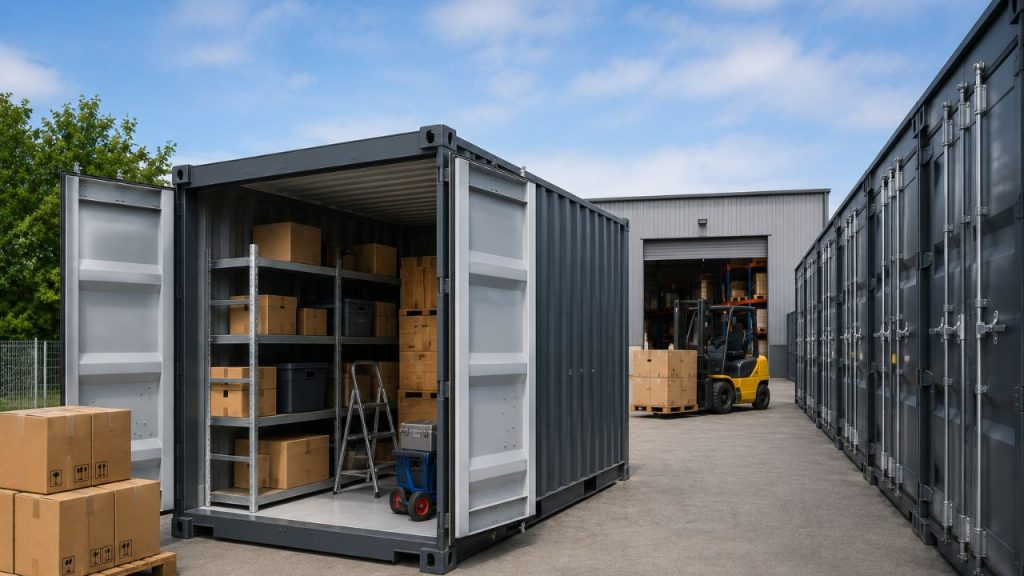
Getting items off the floor changes everything. Shelving units make it possible to see and reach items without moving three other boxes first, and they use vertical space that would otherwise sit empty. Pallets work well for heavier stock that needs to stay off the ground, especially if moisture or ventilation is a concern.
Clear bins are worth the small extra cost over plain cardboard boxes. Being able to see what’s inside without opening every box saves real time, especially when you’re in a hurry.
Safe Stacking and Weight Distribution
Heavier items belong on the bottom, always. Stacking light boxes under heavy ones is asking for a collapsed shelf or a damaged product. Keep stacks stable and avoid building them higher than you can safely reach without a ladder you don’t have with you.
For businesses storing equipment or materials with irregular shapes, like ladders, pipes, or event staging, it’s worth setting aside a specific zone for oddly shaped items rather than trying to fit them wherever there’s a gap. Fighting an awkward shape into a tight space usually ends with something damaged.
Set Your Unit Up to Actually Work for You
Good organisation doesn’t need to be perfect. It just needs to be simple enough to stick with. A well-planned layout saves time on every visit and makes day-to-day operations easier.
If your unit already offers 24-hour drive-up access and good ventilation, organisation is what turns it into a space that works for your business. The easier it is to find, load, and return items, the more value you’ll get from your storage unit.
If you’re considering more space to organise properly, get in touch if you want advice on what size and setup fits how your business actually uses storage.
Frequently Asked Questions
A quick check every few weeks is usually enough to stop things from getting out of hand. A full reorganisation once or twice a year covers most businesses.
Keep it simple. Contents and date are usually enough, and colour-coding by category or department helps if multiple people access the unit.
Shelving helps most when you’re storing smaller items or need to see contents at a glance. Bulkier equipment or pallets might not need it.
Only if you’ll actually keep it updated. A simple spreadsheet or written list is often more reliable than a complicated system that gets abandoned after a few weeks.
Separate them into distinct zones rather than mixing them. Stock that moves often should stay near the front, while equipment used less frequently can sit further back.