The smartest answer to how to store plumbing materials is simple: keep everything off the floor, sorted by type, protected from damp and knocks, and locked behind more than one layer of security. Pipe belongs on horizontal racks with capped ends. Fittings belong in labeled bins. Boxed boilers should stay upright, sealed, and out of the way of foot traffic.
The hard part is finding a place that does all of that at once. A van is an overnight target, a garage fills up fast, and a spare room was never built for 3-meter lengths of copper. This guide covers how to protect stock and equipment properly, and how to tell when your current setup is costing you more than it saves.
Why Proper Storage of Plumbing Materials Matters
Plumbing stock is valuable, bulky, and easy to damage. Poor plumbing supplies storage rarely fails in one dramatic moment. It fails slowly, through dented pipe, missing fittings, and wet cardboard, until a job runs late because the part you need is ruined or lost.
Here is what good storage protects you from:
- Theft: Tools and materials left in a vehicle overnight are a common target. A single break-in can wipe out a week of work and leave you scrambling to restock before the next job.
- Physical damage: Copper kinks and dents, plastic pipe sags when it is poorly supported, and a boiler casing can crack if something heavy lands on the box.
- Contamination: Dirt, dust, and debris that get inside open pipe ends can end up inside a customer’s system.
- Moisture: Damp cardboard weakens packaging, encourages corrosion on loose metal parts and can mark the finish on new appliances.
- Lost time: Hunting through a cluttered van or garage for one fitting adds up across a working week.
There is also a professional angle. Customers notice when a new boiler arrives in a clean, intact box, and they notice when it does not. Organized storage shows up in your work long before anyone sees your stockroom.
How to Store Pipe, Fittings and Boilers Securely?
Group your stock into three categories, because pipe, small parts, and appliances each fail in different ways.
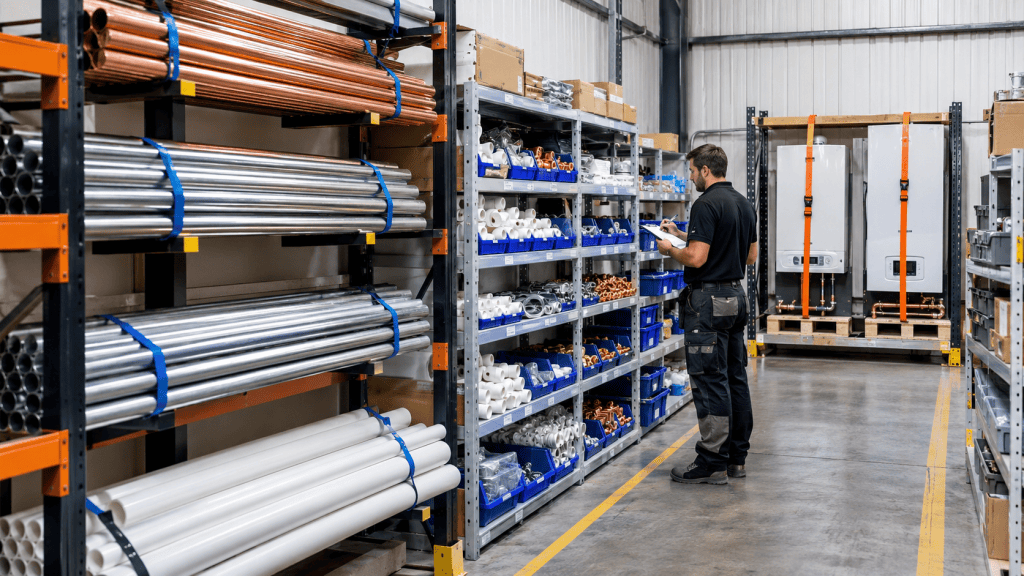
Pipe: store it flat, supported and capped:
- Keep lengths horizontal on wall-mounted or freestanding pipe storage racks, with supports close enough together that nothing bows in the middle.
- Separate copper pipe from plastic and multilayer pipe so heavier metal never crushes softer material.
- Keep plastic pipe out of direct sunlight, since long UV exposure can weaken it.
- Fit end caps or tape over open ends to keep dust and insects out.
- Store coils flat rather than hanging them from one point, which can deform the bore.
Fittings: sort, label and count:
A good fitting organization saves more time than almost any other habit.
- Use clear, stackable bins labeled by type and size, keeping compression, push-fit, solder and threaded parts apart.
- Store valves, washers and O-rings in sealed containers so they stay clean and dry.
- Rotate stock first in, first out, so older parts get used before newer ones.
- Keep a simple stock list on your phone, and update it when you load the van.
Boilers and cylinders: keep them boxed and upright
Safe boiler storage is mostly about following the manufacturer’s packaging.
- Leave units in their original boxes until installation day, and follow the orientation arrows.
- Stand them on pallets or boards so the base never sits in water.
- Avoid stacking beyond what the packaging allows, and never put heavy items on top.
- Record serial numbers and delivery dates for warranty paperwork.
- Position them near the door so you can load without moving everything else.
Protect Against Damp, Theft and Fire Risk
- Leave a small air gap between stock and walls, and use moisture absorbers in sealed spaces, since even a ventilated unit should not be treated as climate-controlled.
- For tool storage for plumbers, use lockable cases, mark your tools, and keep a photo record of serial numbers.
- Keep fluxes, solvent cement, gas cartridges and other flammables or chemicals out of general storage altogether. Most storage providers prohibit them, and they belong in properly ventilated, approved storage that follows your supplier’s guidance.
When Should Plumbers Upgrade Their Storage Solutions?
Most plumbers start with the van and the garage. That works until the business grows. It is time to look at secure storage for tradespeople when you notice any of these signs:
- Stock has spread into your home, hallway or driveway.
- You have had a van break-in, or a near miss that made you nervous.
- You want to buy pipe, fittings or boilers in bulk to lock in better trade pricing.
- You are taking on larger jobs, bathroom refits or new-build contracts with long material lists.
- A new hire needs to collect materials without coming to your house.
- Early starts mean you need stock before the merchant opens.
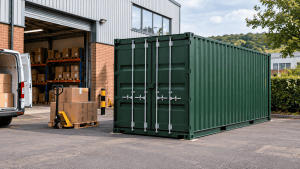
The usual next step is a drive-up storage container. You park beside the door, load straight from the van, and leave without carrying anything through corridors.
Bottom line
Storing plumbing materials comes down to four habits: rack pipe flat and capped, sort fittings into labeled bins, keep boilers boxed and upright on pallets, and never leave valuable stock in the van overnight. Add solid inventory management and a secure, accessible space, and you will spend less on replacements and more time on paid work.
For drive-up business container storage with 24/7 access across 11 sites in London and Hertfordshire, contact WOW Storage today.
Frequently Asked Questions
What is the best way to store copper pipe?
Store copper pipe horizontally on a well-supported rack with the ends capped. Keep it away from heavier items to prevent dents or kinks.
How should plumbing fittings be organized?
Sort fittings into clear, labeled bins by type and size. Rotate stock on a first-in, first-out basis, and keep a simple stock list.
Can you store a new boiler in a storage unit?
Yes. Keep it in its original box, upright as the packaging shows, on a pallet off the floor.
Is it safe to leave plumbing tools in a van overnight?
It is risky, because vans are a common target for tool theft. A locked, gated, and CCTV-monitored storage unit is a safer overnight option.
Can I store flux, solvent cement or gas canisters in a storage container?
No. Flammable materials and chemicals are usually prohibited, so keep them in approved, ventilated storage that follows your supplier’s guidance.