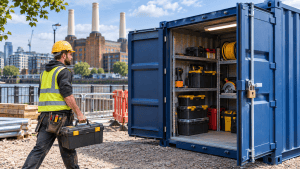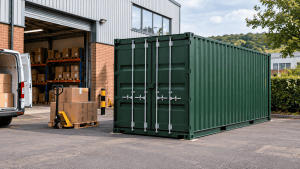
For most London builders, the best answer to where to store builders’ tools is a secure, drive-up storage container close to the jobs you work on. It gets expensive kit out of the van overnight, keeps materials dry and organized, and lets you load straight from the vehicle at any hour, without signing a long warehouse lease.
That said, no single option suits every trade. A plasterer with a few bags of kit has different needs from a fit-out contractor juggling scaffold boards, power tools and pallets of materials. This guide explains why storage matters so much on London sites, compares the common options side by side, and lists the features worth checking before you commit to a space.
Why Proper Tool and Material Storage Matters on London Building Sites
London is a tough city to work in as a tradesperson. Sites are often tight, parking is restricted, and there is rarely spare room to leave equipment safely between visits. Poor storage quietly eats into your time, your margins and your reputation. Here is why it deserves real attention:
- Van tool theft is a constant worry: A van parked on a residential street overnight is an easy target, and losing a full set of power tools can stop work for days while you replace them.
- Weather damages kit: Damp air, condensation and rain lead to rusted blades, swollen timber and spoiled bags of plaster or cement.
- Lost time adds up: Hunting for a specific fixing or a spare battery across a van, a garage and a site box wastes paid hours.
Good building materials storage also cuts waste. When you can keep leftover boards, tiles or insulation dry and in one place, they become stock for the next job instead of skip filler.
What Is the Best Way for London Builders to Store Tools and Materials?
The most practical setup for most trades is a mix of carrying the day’s essential kit in the van while keeping other tools, equipment, and materials in a dedicated, secure space with convenient vehicle access. Having dedicated Storage for Builders makes it easier to organize equipment, protect valuable tools, and access materials whenever they are needed.
| Option | Best for | Main drawback |
| Van with racking or a locked vault | Tools you use every day | Risky to leave loaded overnight |
| Site box or steel chest | Kit needed on one job | Only as secure as the site, and it moves with the job |
| Home garage or shed | Small amounts of hand tools | Limited space, dust at home, often no vehicle access |
| Drive-up storage container | Bulk tools, materials and spare stock | Needs a short drive to collect |
For anyone running more than one job, a drive-up storage container usually wins. You park beside the doors, load straight from the van, and leave nothing in the vehicle at night.
What to Look For In Secure Tool Storage?
Not every space is built for trades. Before you sign up, check these points:
- Vehicle access – Look for ground-level, drive-up units. Some facilities also have stair-access containers, so confirm the exact unit before you book.
- 24/7 storage access – Early starts and late finishes are normal in construction. Round-the-clock gate access, often by phone or keypad, means you are never waiting for an office to open.
- Security you can verify – Fenced and gated yards, recorded CCTV and lighting after dark are the basics. Recorded CCTV is not the same as live monitoring, so ask what is actually in place.
- Your own padlock – A unit you lock yourself with a high-quality padlock keeps control of the key with you.
- Ventilated units – These help reduce condensation, though they are not climate controlled. Internal lighting makes evening visits easier.
- Power on request – Handy for charging cordless batteries so they are ready for the morning.
- Flexible terms – Monthly rolling storage with no deposit, no setup fee and one month’s notice suits work that rises and falls with the season.
Choosing the right size
Most sole traders and small teams find a 20ft container, about 160 sq ft or roughly a large single garage, holds tools, ladders and a good stock of materials. A 10ft unit (about 80 sq ft) or an 8ft unit suits a lighter kit, while a 40ft container works for larger contractor storage needs such as scaffold, plant or fit-out stock. Firms that need even more room can step up to ground-floor warehouse units of 300 or 500 sq ft. Sizes vary by site.
What you should not store
Keep fuel, gas bottles, solvents and other flammable or combustible materials, chemicals and perishable food out of any storage unit. Store fuel-powered equipment with empty tanks, and keep hazardous products at a licensed facility.
Keep it organized
A little planning makes tool storage for tradespeople far more efficient:
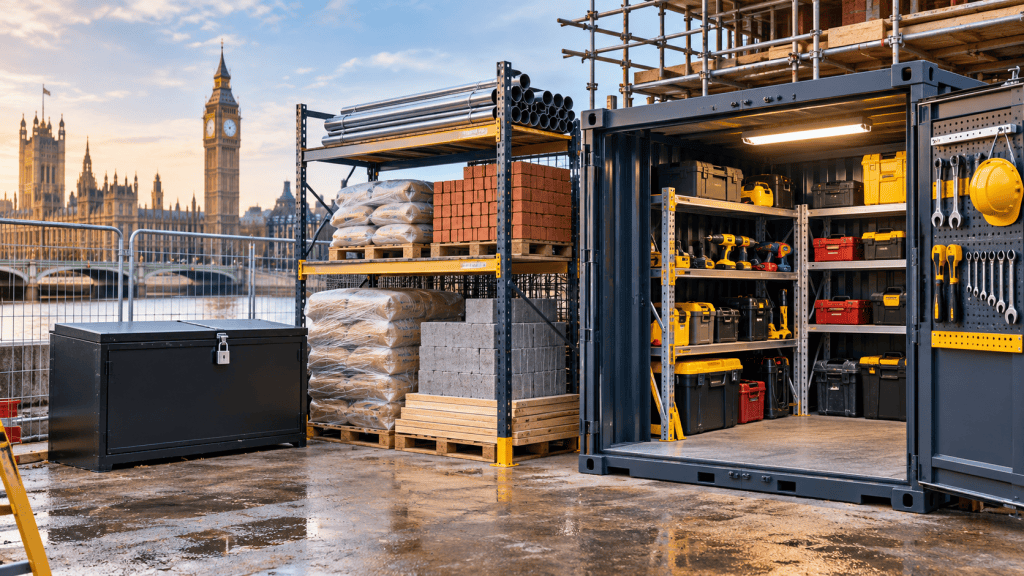
- Fit shelving and wall hooks to use the full height of the unit.
- Put everyday items nearest the doors and slow-moving stock at the back.
- Use labeled crates by trade or job, and keep a simple inventory list on your phone.
- Dry tools before you put them away, and lightly oil blades to prevent rust.
Bottom line
There is no prize for keeping a fortune in tools in the back of a van overnight. For London builders, the smartest approach is to carry only what the day’s job needs and keep the rest in secure tool storage London trades can reach around the clock. Choose a drive-up unit with gated access, recorded CCTV and lighting, lock it with your own padlock, and set it up so you can find any item in seconds. Do that, and you protect your kit, your schedule and your profits.
Looking for a secure base for your tools and materials? WOW Storage offers drive-up containers across London and Hertfordshire with 24/7 access on monthly rolling terms. Contact us now for more information.
Frequently Asked Questions
Where is the safest place to store builders’ tools overnight?
A locked, drive-up storage unit in a fenced and gated yard with recorded CCTV is far safer than a parked van. Unload at the end of the day and collect the kit the next morning.
Is it safe to leave tools in a van overnight in London?
It is risky, because vans are common targets for tool theft. Unload a valuable kit at the end of the day and keep it in a secure, gated unit instead.
What size storage unit do I need for builders’ tools?
A 20ft container, about 160 sq ft, suits most sole traders and small teams. Larger contractors may need a 40ft container or a warehouse unit. Sizes vary by site.
Can I access a tool storage unit early in the morning?
Yes, many container sites offer 24/7 access by phone or keypad entry. This suits early starts and late finishes.
Can I store building materials like timber and plasterboard?
Yes, as long as they are kept off the floor and dry. Flammable products, chemicals and fuel should never be stored.