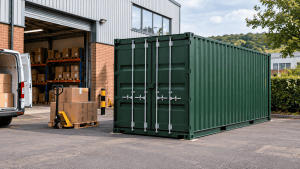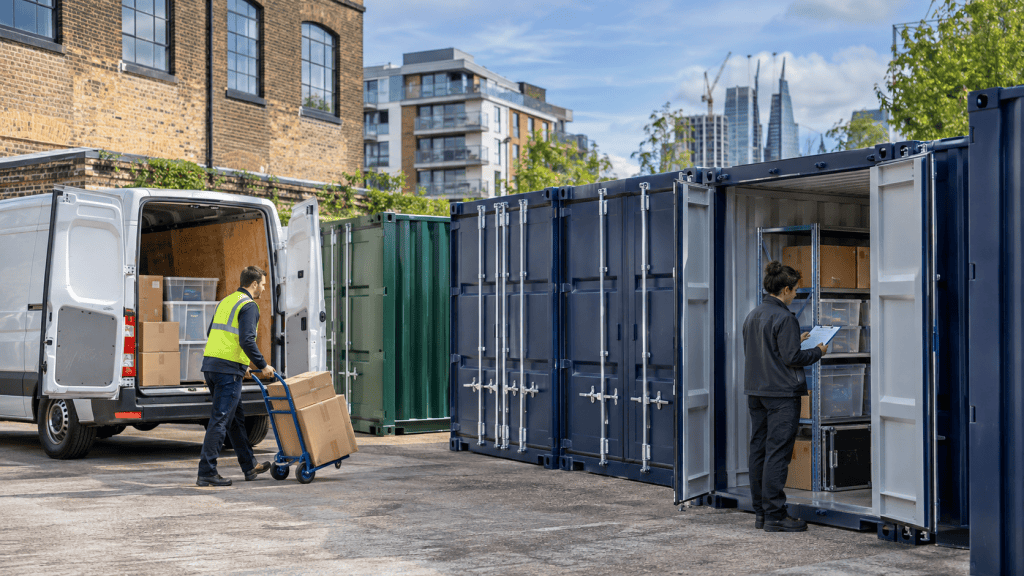
So, who uses container storage in London? Mostly businesses. Tradespeople, contractors, online sellers, event teams, retailers, and fast-growing small companies rent drive-up containers to store stock, tools, materials, and equipment outside their home, van, or shop floor. Households use containers too, but in the capital, the steady demand comes from firms that need extra space without signing a long commercial lease. This post covers which types of businesses rely on container storage, why the model suits them, and what to check before you rent a unit.
What Is Container Storage?
Container storage means renting a steel container that sits in a fenced, gated yard. Unlike indoor self-storage, most units are at ground level, so you park beside the door and load straight from your vehicle. That simple layout is why drive-up storage appeals to people who move heavy or bulky items every week.
Common sizes in London include:
- 8ft containers for small amounts of tools or archive boxes
- 10ft containers, roughly 80 sq ft of floor space
- 20ft containers, about 160 sq ft, or close to the size of a large single garage
- 40ft containers for large volumes of stock or kit
The 20ft unit is the size most business customers choose, because it holds a meaningful amount of stock while still leaving room to work.
Which Businesses Use Container Storage in London?
1. Tradespeople and Contractors:
Builders, electricians, carpenters, plumbers, upholsterers and landscapers are among the most regular users. Leaving tools in a van overnight is a common worry, and storing materials at home brings dust, clutter and lost space. Tool storage for tradespeople solves both problems. A container gives a fixed base where power tools, ladders, timber and fixtures stay organized between jobs.
Access hours matter here. Many trades start early and finish late, so a yard with round-the-clock gate access fits the working day far better than a store that keeps office hours.
2. Online Sellers and E-commerce Brands
Sellers on Amazon, eBay and Shopify often begin in a spare room. Once orders grow, boxes take over hallways and garages. E-commerce stock storage in a container gives these sellers a dedicated space to hold inventory, pack orders and stage returns. With a 20ft container, a small brand can organize stock on shelving and still have a packing table near the door.
3. Retailers Managing Overflow
Shops rarely have enough back-of-house space during busy periods. Retail overflow storage lets a store keep surplus stock, display fixtures and seasonal ranges nearby, then bring items back to the shop floor as needed. It frees up selling space without moving to a larger premises.
4. Events and Exhibition Teams
Event companies handle staging, display stands, furniture, and branded kit used in bursts. Storing event equipment in a drive-up container means the team can load a van at short notice, return late after a show, and unload without carrying gear through corridors or lifts.
5. Fit-Out and Project Teams
Fit-out contractors and project managers often need a temporary base close to a site. A container works as a short-term store for materials, fixtures and equipment while a job runs. When the project ends, the team can give notice and move on, which suits flexible business storage needs.
6. Seasonal Businesses
Some firms need extra space for only part of the year. Garden products, holiday stock, outdoor furniture and promotional materials all fall into this group. Seasonal stock storage lets them scale up space before a busy period and scale back afterward.
7. Growing Small Businesses and Start-ups
Start-ups that have outgrown a garage or spare room often jump straight to a warehouse lease, with deposits, business rates, and long commitments. A container acts as a practical middle step. For many, commercial container storage is a warehouse alternative that covers the space they need today without tying up cash.
What to Check Before Renting a Container
Before you commit, it helps to confirm a few points with the provider:
- Size: Will a 10ft, 20ft or 40ft unit fit your stock and leave room to work?
- Access: Is gate entry available 24 hours a day, including weekends and holidays?
- Security: Is the yard fenced and gated, with recorded CCTV and lighting after dark? You will normally fit your own padlock.
- Conditions: Containers are ventilated, but do not assume climate control. Keep moisture-sensitive goods raised and packed with care.
- Location: Is the site close to your customers, suppliers or job sites?
- Terms: How much notice do you need to give, and is there a deposit or setup fee?
These questions help you match the unit to how your business actually works, rather than paying for space or features you will not use.
Conclusion
The answer to who uses container storage in London is clear: it is mainly businesses that need secure, accessible space without the cost and commitment of a warehouse lease. Trades keep tools safe, online sellers organize stock, retailers clear overflow, event teams store kit, and growing firms find room to scale.
Households use containers too, usually during a move or renovation, but commercial users drive most demand and value drive-up access and flexible terms. For drive-up containers across 11 sites in London and Hertfordshire, reach out to WOW Storage now.
Frequently Asked Questions
Who uses container storage the most in London?
Mostly businesses. Tradespeople, contractors, online sellers, retailers, event teams and growing small firms make up the core of demand. Households use containers mainly during moves or renovations.
What size container do most businesses rent?
A 20ft container, about 160 sq ft, is the most common choice. It holds a good volume of stock or tools and still leaves room to work inside.
Can I access my container outside office hours?
At WOW Storage sites, gate access runs 24/7, including weekends and bank holidays. Office support hours are separate from gate access.
Is container storage a good alternative to a warehouse lease?
For many small and growing businesses, yes. Monthly rolling terms with no deposit and no setup fee avoid the long commitment of a commercial lease.
How quickly can a business move in?
Same-day move-in is possible in most cases, subject to availability. You choose a site, size and date, then pay the first month to reserve